

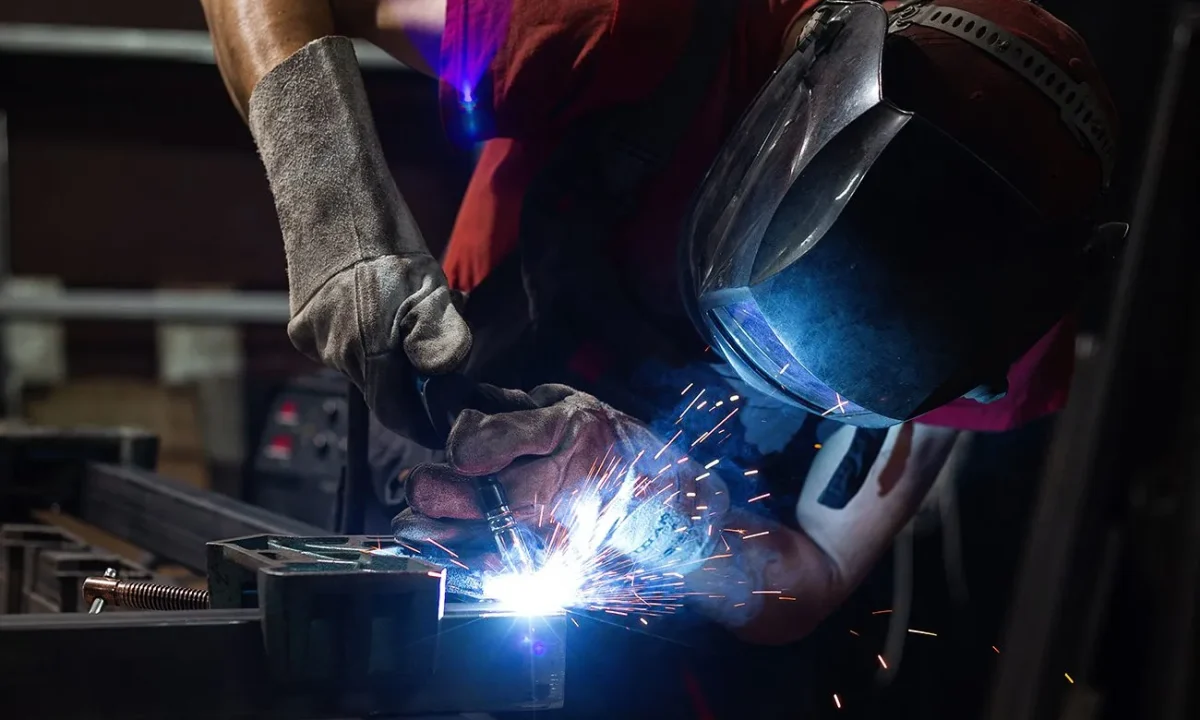
Sécurité en soudage : Gardez le câble de la torche MIG aussi droit que possible - pour une alimentation en douceur et des arcs stables (WeldSafe Essentials 13)
Le câble de la torche MIG est une ligne de vie flexible qui transporte le fil, le gaz, l'alimentation et les signaux de commande, mais une flexion excessive le transforme en une source majeure de résistance. En WeldSafe Essentials #13, Nous expliquons pourquoi le maintien du câble de la torche le plus droit possible est essentielle pour une alimentation régulière du fil, des arcs stables et une usure réduite de l'ensemble du système.
Le problème de la flexion forte
Lorsque le câble de la torche est fortement plié ou enroulé :
- Augmentation de la résistance au dévidage du fil - La gaine à l'intérieur du câble se comprime et crée des points de friction, ce qui oblige le dévidoir à travailler plus dur.
- Vitesse du fil incohérente - Les sauts et les baisses de vitesse provoquent des bavures, des retours de flamme ou des longueurs d'arc irrégulières.
- Arc instable - La fluctuation de l'alimentation en fil entraîne des éclaboussures, des porosités, une mauvaise pénétration et des contre-dépouilles.
- Usure prématurée - Une flexion excessive sollicite le revêtement, la pointe de contact et les rouleaux d'entraînement, ce qui réduit la durée de vie des consommables.
Plus le câble de la torche est long, plus l'effet est important : les petites courbures créent une résistance proportionnellement plus importante sur la distance.
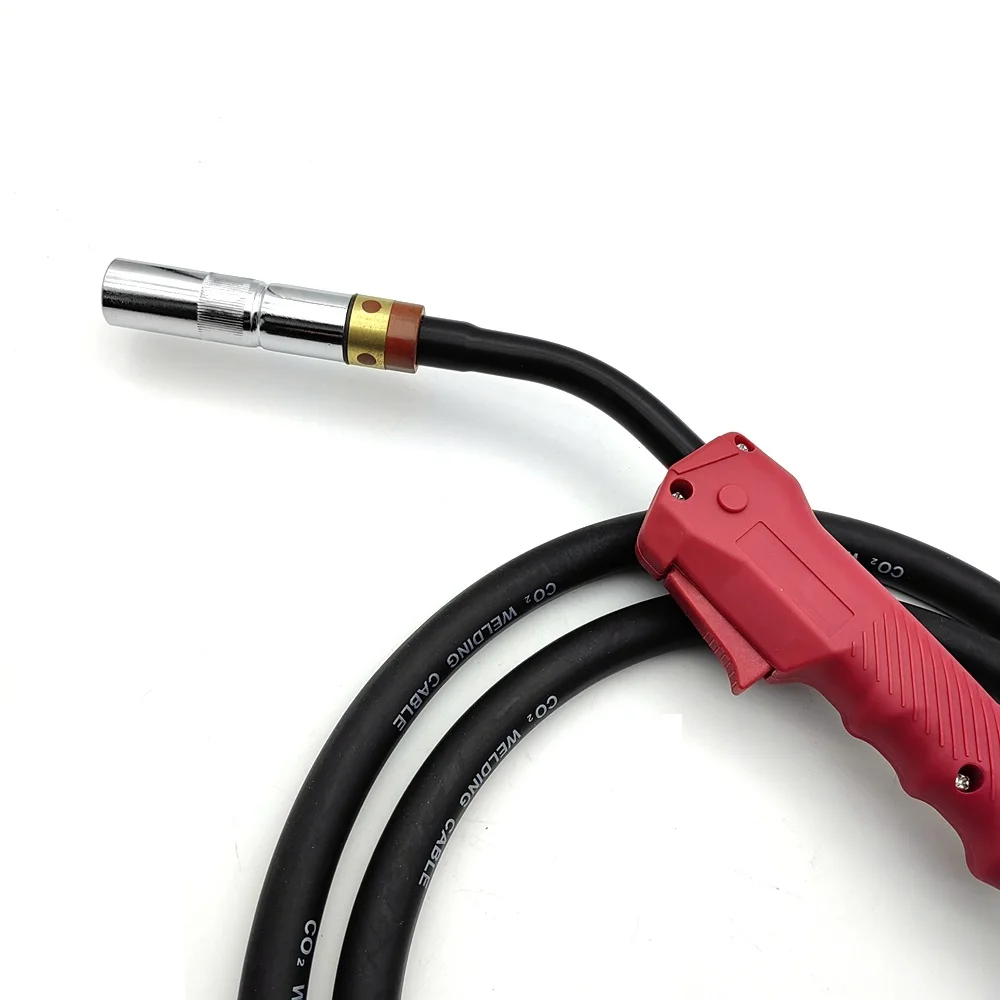
Pratique recommandée : Rayon de courbure minimal
- Les courbes doivent être douces - Maintenir un rayon de courbure minimal de 300 mm (≈12 pouces) ou plus, dans la mesure du possible.
- État idéal - Utilisez le câble de la torche dans un presque droit ou seulement légèrement incurvé entre le dévidoir et le point de soudure.
- Éviter les bobines serrées, les virages serrés à 90°, l'enroulement autour d'obstacles ou le fait de laisser le câble pendre en boucles serrées.
Règle empirique: Plus le câble de la torche est long (par exemple, 4,5 m ou 6 m), plus la température de la torche est élevée. plus grande vous devez conserver le rayon de courbure pour compenser la résistance cumulative.
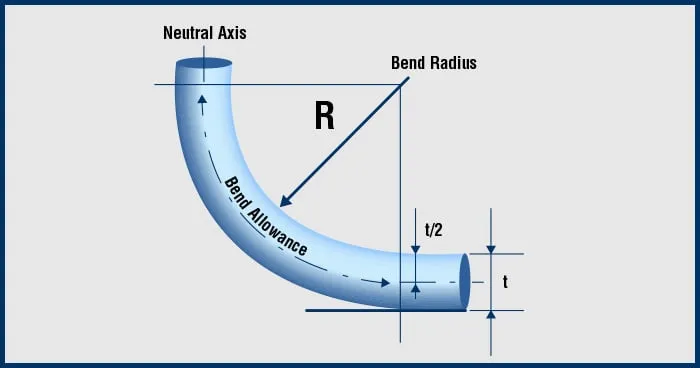
Comparaison visuelle
Voici des exemples montrant le cheminement correct ou problématique des câbles de torche :
- Gauche : Courbe douce à grand rayon → alimentation en douceur
- Droit : Courbes et enroulements serrés → résistance élevée, arc instable
Conseils d'installation rapide
- Placez le dévidoir aussi près que possible de la zone de travail afin de minimiser la longueur de câble nécessaire.
- Utilisez des crochets de câble, des supports ou des bras de flèche pour maintenir le câble de la torche surélevé et légèrement incurvé.
- Évitez de passer sous les pieds, dans les coins ou dans les passages étroits.
- Pendant les pauses, enroulez le câble de la torche de manière lâche sur un crochet - ne l'enroulez jamais de manière serrée.
- Testez l'alimentation manuellement avant de déclencher un arc : tirez le fil à la main - s'il semble granuleux ou résistant, redressez d'abord le câble.
Liste de contrôle rapide avant le soudage
- Câble de torche généralement droit ou légèrement courbé
- Pas de coudes serrés d'un rayon inférieur à 300 mm
- Pas de bobines ou d'enroulements autour de l'équipement
- Le câble est soutenu pour éviter qu'il ne traîne ou ne s'entortille
- Le dévidage manuel du fil se fait en douceur et de manière cohérente
Câble droit = soudures stables
Un câble de torche presque droit est l'un des moyens les plus simples et les moins coûteux d'améliorer les performances du soudage MIG. Respectez le rayon de courbure minimal de 300 mm, en particulier sur les torches plus longues, et vous constaterez une alimentation plus douce, des arcs plus nets et moins de nids d'oiseau ou de retours de flamme. De petites modifications du routage permettent d'importants gains de qualité.
 English
  Español
  Русский
  العربية
  Français
  Português