

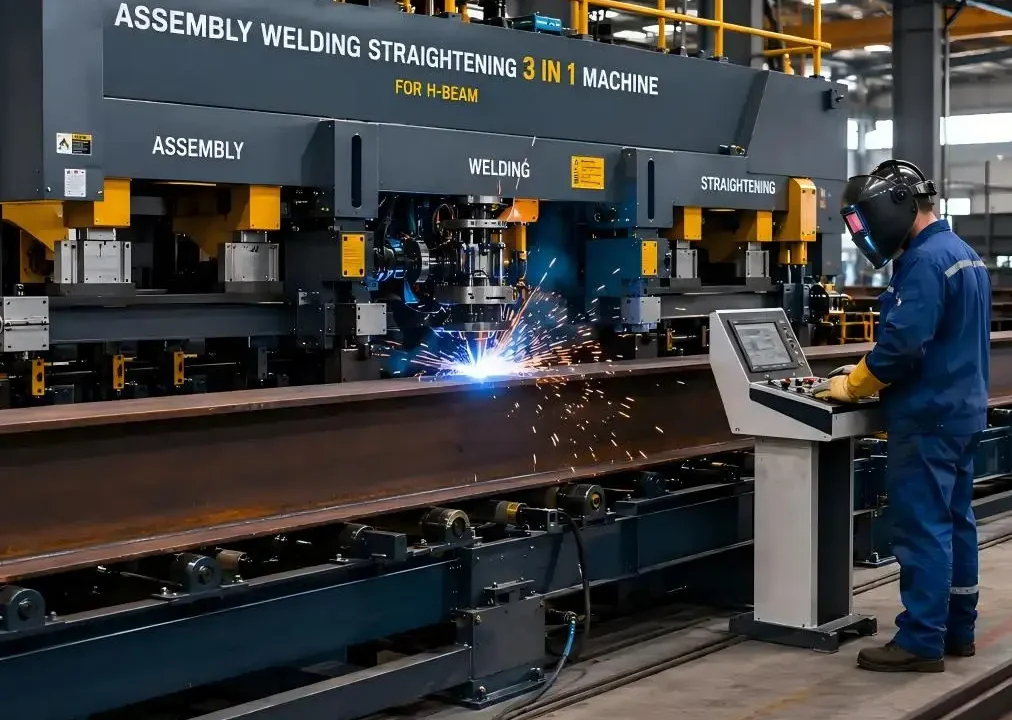
Руководство по стоимости и ценам на машины для сварки и правки сборок двутавровых балок «3 в 1»
Стоимость сварно-правильной машины для сборки балок типа H «3 в 1» обычно составляет от $37 000 и $55 000 на условиях FOB Китай, в зависимости от производительности по размеру балки, диапазона толщины листов и конфигурации сварочной мощности. Это примерно на 30–40% меньше, чем при покупке отдельных станков для сборки, сварки и правки аналогичной производительности.
В данном руководстве подробно изложена полная структура цен для производителей, составляющих смету на создание своей первой интегрированной линии по производству двутавровых балок или замену отдельных станков. Указанные цифры представляют собой ориентировочные рыночные диапазоны цен на условиях FOB по состоянию на 2026 год; к стоимости с доставкой добавляются расходы на морскую перевозку, монтаж и местные пошлины, а окончательная цена зависит от технических характеристик оборудования.
| Уровень конфигурации | Типичная несущая способность балки | Мощность сварочного аппарата | Типичная цена на условиях FOB | Лучшее для |
| Экономика | Ширина полотна до ~1 600 мм, пластины от легких до средних (ширина полотна ≤ 16 мм) | Источники питания SAW общего назначения отечественных брендов | $ 37 000–42 000 | Несложные строительно-монтажные работы, первый этап внедрения автоматизации |
| Стандартный | Ширина полотна до ~1 600 мм, пластина средней толщины | Источники питания SAW, изготовленные по заказу (класс 1 000–1 250 А) | $41 000–48 000 | Изготовление общестроительных металлоконструкций и сборных стальных зданий (PEB) |
| Для тяжелых условий эксплуатации | Середина толщиной до 1 800–2 000 мм, толстая пластина (толщина середины до ~30 мм, толщина фланца до ~40 мм) | Мощные SAW-усилители с высоким током, электрооборудование международных брендов | $ 50 000–60 000 | Работы по изготовлению тяжелых конструкций, мостов и изделий из толстой стали |
Какие факторы влияют на цену сварочно-правильной машины для сборки балок типа H «3 в 1»?
Цена станка для производства балок типа H по технологии «3-в-1» определяется четырьмя факторами: номинальной производительностью по размерам балок (высота стенки и толщина листа), конфигурацией источника сварочного тока, комплектом систем электрического управления и уровнем автоматизации процессов обработки материалов. Номинальная производительность по размерам балок является основным фактором, определяющим наибольшую разницу в цене между различными уровнями конфигурации.
Насколько размер луча влияет на цену?
Переход с класса высоты полотна 1 600 мм, рассчитанного на обработку полотен с толщиной стенки 16 мм, к классу 1 800 мм, предназначенному для обработки полотен с толщиной стенки 30 мм и толщиной фланца 40 мм, приводит к увеличению стоимости станка примерно на 20–25%. Этот скачок обусловлен не столько дополнительными 200 мм высоты полосы, сколько толщиной листа: для правки фланца толщиной 40 мм требуются значительно более массивные правки-ролики, более высокое усилие гидравлического зажима и более жесткая портальная рама, чем для фланца толщиной 25 мм, и эти конструктивные усовершенствования затрагивают всю конструкцию станка.
Для большинства производителей металлоконструкций PEB и общего назначения класс 1 600 мм / 25 мм охватывает весь ассортимент продукции. Класс «для тяжелых нагрузок» оправдывает свою более высокую стоимость только в том случае, если в вашем портфеле заказов присутствуют мостовые балки, тяжелые промышленные здания или колонны из толстой стали — в таком случае укажите его с самого начала, поскольку несущая способность балки является единственным параметром, который невозможно увеличить впоследствии.
Как конфигурация источника питания для сварки влияет на стоимость?
Аппарат типа «3 в 1» данного класса в стандартной комплектации поставляется с двумя источниками питания для сварки методом SAW — по одному на каждую сторону углового шва — и уровень бренда этих источников питания влияет на цену аппарата примерно на 10–12%. На рынке аппараты, оснащённые стандартными отечественными источниками питания, составляют основу бюджетного сегмента, тогда как агрегаты, укомплектованные собственными источниками питания производителя (как правило, класса 1 000–1 250 А) или источниками питания от известных международных брендов, определяют стандартный сегмент.
С практической точки зрения при выборе оборудования важнее не престиж бренда, а вопрос ответственности: источник питания является наиболее нагруженным компонентом машины, поэтому необходимо уточнить, кто несет ответственность за его техническое обслуживание. Конфигурация, при которой машина, источники питания и система отслеживания шва поставляются одним поставщиком, позволяет избежать взаимных обвинений между тремя поставщиками, чего многосменные предприятия себе позволить не могут.
Какие возможности предоставляют системы электрооборудования и автоматизации?
Электрооснащение премиум-класса и дополнительные системы транспортировки заготовок увеличивают стоимость в верхнем ценовом диапазоне ещё на 8–10%. Типичные опции включают электрические шкафы управления международных брендов (Schneider или Siemens) с дистанционным управлением, усовершенствованные подающие стойки с третьим центрирующим манипулятором, а также гидравлические силовые агрегаты с удобным доступом для технического обслуживания. Эти опции в первую очередь обеспечивают увеличение времени безотказной работы и удобство оператора, а не повышение производительности, поэтому они чаще всего встречаются в конфигурациях для тяжелых условий эксплуатации, которые приобретают производители, использующие станок в качестве узкого места в производственном процессе.
Является ли машина «3 в 1» более выгодной с финансовой точки зрения, чем приобретение отдельных станков для сборки, сварки и правки?
Да — комплексная машина «3 в 1» обычно обходится на 30–40% дешевле, чем приобретение отдельных станков для сборки, портальной машины для сварки методом SAW и машины для правки фланцев аналогичной производительности, причем экономия не ограничивается только стоимостью приобретения.
Сколько стоят три отдельных устройства по сравнению с моделью «3 в 1»?
Исходя из текущих рыночных цен на условиях FOB, стоимость отдельного оборудования составляет $65 000–90 000, тогда как аналогичная установка «3-в-1» находится в диапазоне $41 000–50 000. Стоимость этого комплекта быстро складывается: машина для сборки H-образных балок стоит $20 000–24 000, портальный сварочный аппарат SAW — $19 000–24 000, а гидравлическая машина для правки фланцев — $26 000–43 000,000–43 000 в зависимости от ширины фланца и типа привода. Частично разница обусловлена общей конструкцией — одна рама, одна система управления и один конвейерный участок вместо трёх.
Откуда происходит экономия на операционных расходах?
Более значительная экономия достигается за счет оптимизации производственного процесса: меньшее количество станций, сокращение объема погрузочно-разгрузочных работ и уменьшение численности персонала. При использовании отдельных станций балку необходимо перемещать, перепозиционировать и заново зажимать между каждым этапом обработки, что увеличивает время на погрузочно-разгрузочные работы и требует дополнительной производственной площади для размещения трёх станций, а также буферных зон. Станок «3 в 1» выполняет сборку с помощью прихваточной сварки, сварку SAW и выпрямление фланцев за один непрерывный проход через одну станцию. Для производителей, работающих на рынках, где наблюдается нехватка квалифицированных сварщиков, сокращение численности персонала зачастую становится решающим фактором.
В каких случаях покупка отдельных устройств по-прежнему целесообразна?
Использование отдельных станков остается оптимальным решением в двух случаях: когда объемы производства оправдывают создание отдельных параллельных линий для каждого технологического процесса, либо когда имеющаяся правка остаётся пригодной к эксплуатации, а замену требуют только сборочные и сварочные станции. Подробное сравнение см. в нашем анализе, посвящённом сравнению станка «3 в 1» с отдельными сборочными, сварочными и правковыми станками.
На какую сумму увеличивают общую стоимость доставка, монтаж и ввод в эксплуатацию?
Предусмотрите дополнительные расходы в размере 10–18% от цены оборудования на условиях FOB для покрытия затрат на морскую перевозку, страхование, монтаж и ввод в эксплуатацию. Для машины стандартной комплектации стоимостью $45 000 это, как правило, означает дополнительные расходы в размере $4 500–8 000 сверх цены FOB до уплаты местной импортной пошлины.
Сколько стоят морские перевозки и импортная пошлина?
Стоимость морской перевозки машины «3-в-1» — отгружаемой в частично разобранном виде на плоских поддонах или в контейнерах с открытым верхом — обычно составляет от $3 500 до $8 000 в крупные порты Южной и Юго-Восточной Азии, а в Южную Америку или Африку — еще больше. Размер импортной пошлины и местных налогов зависит от страны и классификации оборудования; перед размещением заказа уточняйте актуальные ставки у местного таможенного брокера, поскольку классификации периодически пересматриваются.
Что происходит в ходе монтажа и ввода в эксплуатацию?
Монтаж и ввод в эксплуатацию обычно занимают 10–15 рабочих дней с участием одного или двух инженеров от производителя и включают в себя механическую сборку, электрическое подключение, калибровку параметров сварки, а также обучение операторов. В соответствии со стандартом AWS D1.1 производственные сварные швы должны выполняться в соответствии с утверждённой спецификацией процедуры сварки (WPS), поэтому в ходе ввода в эксплуатацию необходимо установить и задокументировать параметры сварки под флюсом (SAW), которые впоследствии будут проверяться вашим инспектором — этот этап не требует дополнительных затрат во время ввода в эксплуатацию, однако его отдельная организация впоследствии обходится дорого.
Каков срок окупаемости установки для производства двутавровых балок «3 в 1»?
Большинство производителей окупают затраты на установку станка «3 в 1» в течение 12–24 месяцев, причем это происходит в основном за счет экономии трудозатрат и увеличения ежемесячного объема производства, а не только за счет стоимости самого оборудования.
Как рассчитывается срок окупаемости?
Расчет окупаемости основывается на двух показателях: сокращении численности персонала и производительности. По сравнению с ручной или полуавтоматической линией одностанционный станок «3-в-1» обычно заменяет отдельные бригады по сборке, сварке и правке на две-три оператора в смену, при этом скорости перемещения в диапазоне 1 500–2 000 мм/мин, характерные для данного класса станков, позволяют обеспечить пропускную способность балок, соответствующую графику производства средних размеров. На таких рынках, как Индия, где в металлообрабатывающей отрасли отмечается нехватка более 600 000 квалифицированных сварщиков, решающим фактором зачастую становится именно экономия трудозатрат, а не увеличение производительности.
Что сокращает или увеличивает срок окупаемости?
Количество рабочих смен является основным фактором, влияющим на рентабельность инвестиций. По нашему опыту, производители, которые быстрее всего окупают инвестиции, — это те, кто с первого квартала эксплуатирует станок в двухсменном режиме; односменная работа существенно удлиняет срок окупаемости. Не менее важную роль играет уровень заработной платы в вашем регионе — станок стоимостью $45 000 конкурирует с очень разными показателями затрат на оплату труда на разных рынках — поэтому перед размещением заказа просчитайте свой собственный сценарий с учетом реальных местных затрат на рабочую силу.
Как соотносятся цены на китайские и европейские кофемашины «3 в 1»?
Установки типа «3 в 1», произведенные в Китае, как правило, стоят менее половины цены аналогичного интегрированного оборудования европейских брендов, причем эта разница увеличивается в классах с более высокой производительностью и при создании полноценных производственных линий.
Почему оборудование китайского производства обходится дешевле?
Разница в цене обусловлена структурными преимуществами в затратах, а не единичными урежениями на качестве. Китайские производители получают выгоду за счет более низких затрат на производственный труд, наличия внутренних цепочек поставок стали и комплектующих, а также высоких объемов производства данной конкретной категории оборудования — станки для изготовления двутавровых балок являются основной продукцией в китайской отрасли оборудования для металлоконструкций, а не специализированной продукцией. Основные компоненты представлены продукцией международных брендов: покупатели могут заказать электрооборудование Schneider и проверенные силовые установки SAW, что позволяет свести к минимуму различия в качестве, сохраняя при этом общую стоимость значительно ниже европейского уровня.
Что европейские бренды по-прежнему могут предложить в сегменте премиум-класса?
Преимуществом европейских брендов является близость: более оперативное обслуживание на месте в пределах Европы и Северной Америки, а также готовая документация по соответствию требованиям для рынков, регулируемых маркировкой CE. Для покупателей из Азии, Ближнего Востока, Африки и Южной Америки это преимущество менее значимо — расстояния для выездного обслуживания из Китая сопоставимы, а конфигурации, соответствующие требованиям CE, доступны по запросу. Практический вопрос заключается не в том, какая машина лучше в абсолютном выражении, а в том, оправдана ли такая разница в цене с учётом требований вашего рынка к сервисному обслуживанию и соответствию нормативным требованиям.
Заключение
Стоимость экономичного станка для производства двутавровых балок типа «3-в-1» составляет $37 000–42 000 на условиях FOB, $ 41 000–48 000 в стандартной конфигурации и $ 50 000–60 000 для версии, рассчитанной на обработку толстых листов, — плюс 10–18% на транспортировку, монтаж и ввод в эксплуатацию. Наиболее важным фактором при выборе конфигурации является производительность по балокам, в частности толщина листов; её невозможно будет увеличить впоследствии, поэтому укажите параметры с учётом балок, которые вы планируете производить через три года, а не тех, которые вы производите сегодня.
Компания ZMDE производит машины для сварки и правки сборочных узлов H-образных балок типа «3 в 1» во всех трёх классах конфигураций, описанных в данном руководстве, с использованием разработанных собственными силами технологий горячей сварки и горячей правки. Свяжитесь с инженерной командой ZMDE с указанием технических характеристик балок и ежемесячного планового объема грузоперевозок, и мы подготовим для вас подробное коммерческое предложение с расчетом срока окупаемости для вашего предприятия.
 English
  Español
  Русский
  العربية
  Français
  Português